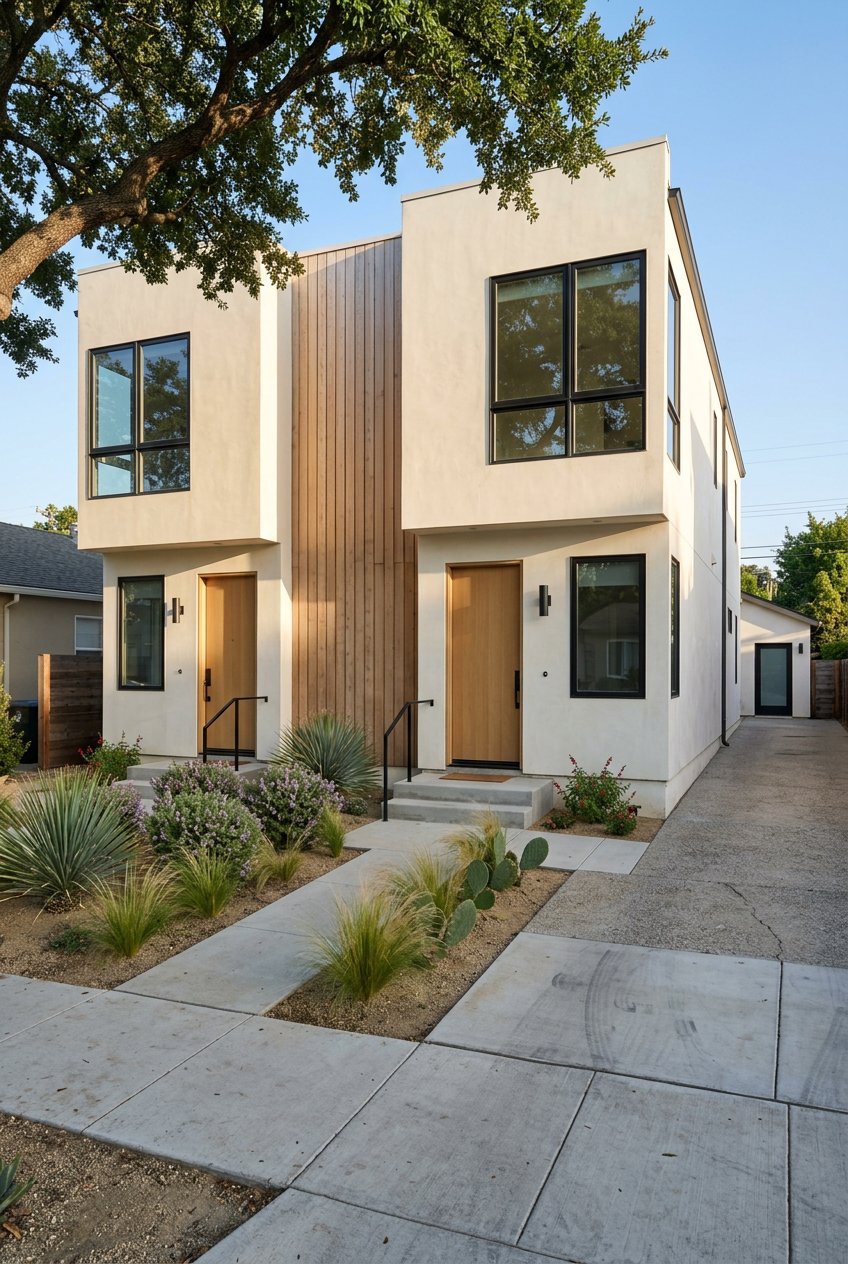
Thinking about adding an ADU or buying a duplex in East Austin, but unsure where to start? You’re not alone. The opportunity is real, yet the rules, costs, and timelines can feel complex. In this guide, you’ll get a clear plan for evaluating ADUs and duplexes in East Austin, including current market context, the City of Austin rules that shape feasibility, realistic budgets, and smart financing and tax questions to ask. Let’s dive in.
Why East Austin for ADUs and duplexes
East Austin sits close to downtown and has strong, long-term rental demand. Recent rent growth slowed in 2024 and 2025 as a large wave of new apartments hit the market, which raised vacancy and pushed many landlords to offer concessions. That near-term softness means you should underwrite conservatively while keeping a long view on demand.
As a quick snapshot, recent reports placed the East Austin median sale price around $506,000, with rent levels in central ZIP 78702 averaging about $2,400 per month. Those are broad indicators. Your returns will hinge on the street, the lot, and the condition. In today’s market, conservative assumptions and tight renovation budgets go a long way.
- Supply context: A sizable central Austin multifamily pipeline delivered in 2023 and 2024, which pressured rents and slowed absorption. You can see this trend in market reports on Austin’s mid-year performance and supply wave in 2024 (Berkadia’s Austin summary).
- Rent trend context: Several third-party indices reported Austin rent declines in 2024 and mixed results into 2025. Expect a slow-growth environment in the near term, and model rent-downside scenarios when you analyze deals. For background on recent rent patterns, review this overview of Austin rent levels and drivers (Apartment List’s Austin rent article).
- Cap-rate backdrop: Institutional multifamily cap rates in Austin moved toward the mid-5 to mid-6 percent range by late 2025, according to market reports. Small duplexes in walkable, central pockets often trade at lower yields. Use hyper-local comps to set your target cap rate (Matthews Q4 2025 Austin multifamily report).
ADU and duplex rules that drive feasibility
City rules directly shape what you can build or legalize. Confirm these items early to avoid sunk design costs.
ADU basics to verify first
- Zoning and lot size. ADUs are regulated by Austin’s Land Development Code. Many single-family zones allow an ADU when the lot meets minimum size, commonly referenced around 5,750 square feet. Always verify the parcel’s zoning, exact lot area, and any overlays or deed restrictions before you spend on design. Review the City’s primer on ADUs here: City of Austin ADU guidance.
- STR limits. ADUs built after October 1, 2015 face significant short-term rental limits. Do not assume nightly rental income without confirming what’s allowed under current rules. The City’s ADU page outlines these restrictions.
- Duplexes and the HOME ordinance. Austin adopted HOME-related LDC amendments starting in 2023 that updated how one, two, and three units are treated on a lot. Some lots once constrained may now support two or more units, but standards like floor-area ratio, impervious cover, and compatibility still apply. Confirm parcel-specific rules against the current LDC text or schedule a City review: Austin LDC HOME updates portal.
Permitting timelines and practical steps
- Plan review typically takes weeks for minor interior projects and months for detached new construction, depending on workload. Build timeframes into your underwriting. The City’s submittal pathways and target service levels are outlined here: Residential Plan Review.
- Fees and utilities. Impact and connection fees vary by scope. Some ADU additions can be treated differently on impact fees if they do not add peak trips, but verify your exact case. Early utility coordination helps avoid surprises.
- Overlays and history. East Austin includes historic and cultural districts. If your property sits in one of these areas, you may face additional review and design standards. That can change timelines and finishes. Start with a quick overlay check and, if needed, a pre-application meeting with City staff.
Budget, timeline, and scope: realistic ranges
Every site is unique, but these order-of-magnitude ranges help you frame budgets before you collect bids.
Common project types and ballpark costs
- Interior or garage conversion to ADU. Light-to-moderate scope with plumbing and electrical upgrades, insulation, mini-split HVAC, and finishes. Budget roughly $30,000 to $120,000 depending on structural work and finish level. Get two to three contractor bids early.
- Detached new ADU, 400 to 900 square feet. All-in costs often land in the range of about $150 to $400+ per square foot, depending on site work, utilities, and finishes. A 600-square-foot unit could pencil around $90,000 to $240,000 at a broad level. Modular can help with time and some costs, but still requires site prep and permits.
- Duplex renovation or conversion. Separating utilities, adding kitchens and baths, egress and fire separation work, and reconfiguring interiors. Plan for roughly $40,000 to $150,000 per unit for small-to-moderate rehabs, with systems and finishes driving the spread.
Timeline planning
- Design and permitting: 1 to 4 months, depending on scope and review cadence. Booking a Preliminary Plan Review can help. See the City’s process outline: Residential Plan Review.
- Construction: 3 to 9 months for typical ADUs or duplex rehabs, depending on site conditions and contractor availability.
- Loan qualification note: If you plan to use projected rents from a new unit to qualify, many lenders require an appraisal-supported market rent and sometimes an executed lease at closing. FHA guidance details documentation and reserve expectations for owner-occupants using rental income (HUD SFH FAQ).
Underwrite with 2025–2026 reality
Start with conservative rent and vacancy assumptions, then stress-test your model.
Estimate Gross Scheduled Income. Use hyper-local comps for the exact unit type and finish. In central ZIPs like 78702, recent snapshots placed average rent near $2,400 per month across unit types, but ADUs often rent slightly below a full primary unit while commanding a higher price per square foot. Adjust for size and finish quality.
Apply a vacancy and concession allowance. Given the recent supply wave and slower rent growth, it’s prudent to model a bit higher vacancy or concessions for the next 12 to 24 months. For context on supply and absorption challenges, review the 2024 delivery wave overview (Berkadia mid-year Austin) and rent trend context (Apartment List on Austin rents).
Calculate Effective Gross Income, then Operating Expenses. Include taxes, insurance, maintenance, management, and reserves. Small duplexes tend to run higher expense ratios than large apartments because fixed costs are spread over fewer units. Confirm current appraised value and exemptions to estimate taxes.
Determine NOI and value via cap rate, or test Debt Service Coverage. As a backdrop, institutional Austin multifamily cap rates sat around the mid-5 to mid-6 percent range in late 2025, while small central assets may trade tighter. Use local comps to refine your going-in and stabilized yields (Matthews Q4 2025 report).
Sensitivity test. Run minus 5 to 15 percent rent scenarios and plus 10 percent on renovation costs. Build in timeline buffers for permits and inspections.
Financing and tax keys to discuss early
Financing paths
- Owner-occupant house-hack. Buying a two-unit property and living in one unit can unlock more favorable financing. FHA and agency programs often allow a portion of the other unit’s rent to help you qualify, with documentation and reserve rules that vary by program. FHA lenders commonly use 75 percent of the lesser of the appraiser’s market rent or the lease amount for qualifying calculations, when applicable. Review FHA’s published guidance and talk through the details with your lender (HUD SFH FAQ).
- Conventional/agency loans. Fannie and Freddie allow rental income from 2 to 4 unit owner-occupied properties with specific appraisal forms and documentation. Ask each lender about overlays, required reserves, and how they treat newly created ADU income.
- Renovation and construction options. Ask about rehab and construction loans, draw schedules, and whether projected ADU rents can be considered. Timelines for disbursement affect your carry and cash plan.
Key lender questions:
- Will you accept projected ADU or duplex rents to qualify, and at what percentage of gross? What documents do you need?
- What are the max LTVs and reserve requirements for 2-unit owner-occupied purchases in today’s market?
- Do you offer 203(k) or construction options, and how do draws work relative to inspections?
Tax and sale considerations
- Depreciation. Residential rental property generally depreciates over 27.5 years under MACRS, which shapes your cash flow and tax profile. Confirm how you allocate land vs. building basis with a CPA (IRS Publication 946).
- Selling a mixed-use home. If you live in one unit and rent the other, the primary residence exclusion under Section 121 can be complex, and depreciation is subject to recapture. Review capital gain rules and alternatives like 1031 exchanges for pure investment property with your tax advisor (IRS Publication 544).
- Property taxes. Adding an ADU or reclassifying to a duplex can raise appraised value. Check your Travis Central Appraisal District record and exemptions to estimate future taxes (TCAD update on appraisals).
- Landlord-tenant law. Texas eviction procedures and timelines are specific. Build realistic expectations for screening, lease enforcement, and legal costs.
Holding strategies that fit East Austin
- Owner-occupant house-hack. Live in one side of a duplex or a home with an ADU and rent the other to offset your payment. This can offer favorable financing and a strong path to equity.
- Value-add short-term hold. Renovate, lease-up, and refinance after stabilization to recycle capital. This requires a reliable contractor bench, clear scopes, and conservative buffers.
- Long-term buy-and-hold. Treat small properties like a business. Focus on tenant retention, maintenance planning, insurance right-sizing, and consistent tax strategy.
Your first 30-day checklist
Use this to kick off due diligence and avoid expensive surprises.
- Confirm zoning, lot size, and overlays; scan the City’s ADU guidance and HOME updates for your parcel’s rules. If needed, book a pre-application or plan review appointment (Residential Plan Review).
- Pull today’s zip- and neighborhood-level rent comps for ADU-sized units and duplexes. Adjust for unit size, finish, and parking.
- Get two to three contractor bids for the major scopes: foundation/site work, utilities, framing, electrical, plumbing, HVAC, and finishes.
- Build a timeline. Underwrite 1 to 4 months for design and permits, 3 to 9 months for construction, plus buffer.
- Talk to two lenders. Ask how they treat projected ADU income, what percentage they count, documentation, max LTV, reserves, and any rehab or construction options.
- Model taxes and insurance. Check your TCAD record and request an insurance quote that matches your planned use and occupancy.
- Run sensitivities. Test lower rents, higher vacancy, and a 10 percent cost overrun.
How Walker Residential Group helps
You deserve local, negotiation-led guidance from a team that knows East Austin’s streets, rules, and vendor bench. If you want practical underwriting, permit-savvy vendor referrals, and an advocate who can help you spot value and avoid risk, connect with Walker Residential Group. We pair data-informed advice with white-glove coordination so you can move from analysis to action with confidence.
FAQs
What ADU lot size and zoning rules apply in East Austin?
- In Austin, ADU eligibility depends on zoning and lot size, with many single-family lots commonly using a 5,750-square-foot threshold. Verify parcel zoning, overlays, and deed restrictions with the City’s guidance and current code before designing (City of Austin ADU guidance).
Can I use an East Austin ADU as a short-term rental?
- Short-term rental use is restricted, especially for ADUs built after October 1, 2015, so confirm what’s allowed and do not underwrite nightly rental income without checking current rules (City of Austin ADU guidance).
How long do permits and construction usually take for an ADU or duplex conversion?
- Plan review can take weeks for interior work and months for detached builds, and typical construction runs 3 to 9 months; build buffers into your schedule and confirm submittal steps with the City (Residential Plan Review).
What budgets should I expect for an ADU or duplex rehab in East Austin?
- As broad guides: $30,000 to $120,000 for simple interior or garage ADU conversions, about $150 to $400+ per square foot for detached ADUs, and $40,000 to $150,000 per unit for many duplex rehabs, with site work and systems driving costs.
How do lenders count rental income when I buy a duplex or add an ADU as an owner-occupant?
- FHA and agency programs often allow a portion of rental income to qualify; FHA lenders commonly use 75 percent of the lesser of appraiser’s rent or lease rent with required documentation and reserves, so confirm details with your lender (HUD SFH FAQ).
How will an ADU affect my Travis County property taxes?
- Adding an ADU or reconfiguring to duplex use can raise appraised value, so check your current record, factor a likely increase, and review exemptions with Travis CAD (TCAD appraisal update).
What cap rates should I use to evaluate a central East Austin duplex?
- Recent market reports placed institutional Austin multifamily cap rates in the mid-5 to mid-6 percent range, while small central properties can trade tighter; lean on hyper-local comps for your target yield (Matthews Q4 2025 report).
Is East Austin rent growth slowing, and how should I model vacancy?
- A 2023–2024 supply wave softened rent growth and raised vacancy, so model conservative rents and a vacancy or concession cushion while the market absorbs new units (Berkadia mid-year Austin and Apartment List overview)).