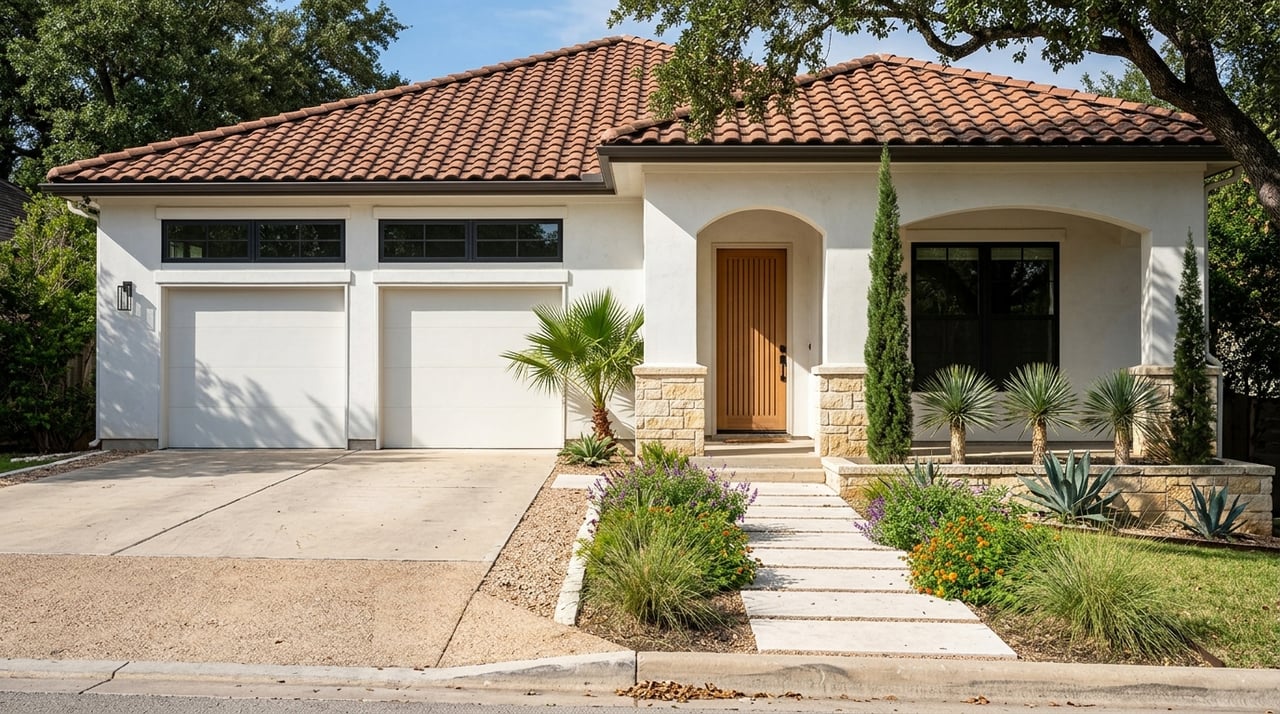
If you are trying to choose between southwest Austin and a farther-out suburb, you are really deciding how you want your daily life to feel. Do you want to stay closer in with more route options and established surroundings, or trade that for more land, newer development, and a little more breathing room? The right answer depends on what you value most, and understanding the tradeoffs can help you buy with more confidence. Let’s dive in.
What 78735 Really Means
Before comparing southwest Austin to outer suburbs, it helps to define the map. The 78735 area is a ZIP-based geography, which means data tied to it is generally reported as a Census ZIP Code Tabulation Area rather than an exact USPS delivery boundary.
In practical terms, 78735 is best understood as part of the broader southwest Austin and Oak Hill conversation, not a perfectly fixed neighborhood line. For planning purposes, much of this area falls within the Oak Hill Combined Neighborhood Planning Area, which the City of Austin describes as a large southwest Austin planning area with a mix of land uses and housing types.
That matters because 78735 is not a one-note market. It includes a blend of single-family homes, townhouse and condominium options, multifamily areas, rural residential pockets, commercial uses, and open space. If you are comparing it to suburbs farther from Austin’s core, you are comparing a mixed, closer-in area with communities that are often built around more uniform suburban patterns.
Commute Differences Matter
For many buyers, commute patterns are one of the biggest deciding factors. Southwest Austin is shaped by several key routes instead of one single corridor, and that can give you more flexibility depending on where you work and how you move around the city.
TxDOT describes Loop 360 as a primary access route for far west Austin and a major commuter corridor. It also notes that rush-hour travel can take more than 60% longer than free-flow conditions, so traffic is still a real part of the equation.
At the same time, the Oak Hill area is seeing major infrastructure investment. The Oak Hill Parkway project is rebuilding the US 290 and SH 71 junction with flyovers and widened roadway improvements, with completion anticipated in 2026.
Farther-out suburbs usually rely more heavily on fewer commuter routes. Leander points to Route 183 as its direct connection toward downtown Austin, while Kyle’s mobility updates are closely tied to I-35 and the changes that come with construction and traffic flow on that corridor.
If you want the simplest version, it is this:
- Southwest Austin often gives you more route choices and generally shorter access to central Austin
- Farther-out suburbs often give you more space, but your drive may depend more on one main highway
- Construction and incidents can affect both, but outer suburbs may feel those disruptions more when there are fewer alternate routes
Southwest Austin Offers More Housing Variety
One of the clearest differences is the type of housing you are likely to find. In and around Oak Hill, the official planning framework shows a wide range of residential formats.
That includes rural residence, large-lot single-family, standard lot single-family, small-lot and condominium options, townhouses, and multifamily districts. So while some buyers think of southwest Austin as only larger homes on larger lots, the reality is more layered.
This can be a real advantage if you want flexibility. You may be able to find a property with a Hill Country setting, mature trees, and more space than central Austin, while still having options that do not require a full acre or a fully suburban subdivision layout.
Farther-Out Suburbs Often Mean More Uniform Neighborhoods
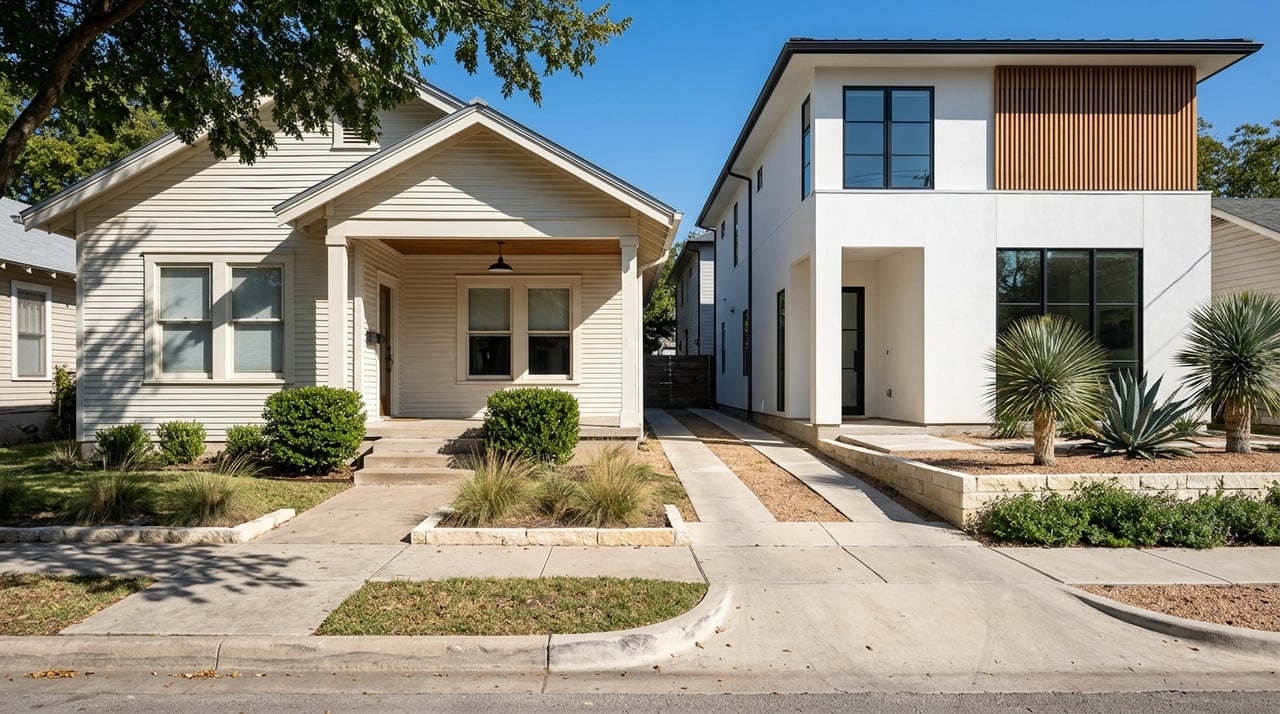
As you move farther from Austin, housing patterns often become more consistent. Planning documents in places like Dripping Springs and Cedar Park point toward a more classic suburban form, with traditional single-family neighborhoods playing a leading role.
Dripping Springs describes suburban neighborhoods as having large blocks, limited street connectivity, and less variety in lot sizes and housing types. Its planning framework also points to estate-style areas with lots over one acre, mature vegetation, and lower-density living.
Cedar Park’s plan similarly identifies traditional single-family homes as the predominant residential type, with townhomes and higher-density products concentrated in more specific locations. For buyers, that usually means a more predictable neighborhood layout and, in many cases, a newer subdivision feel.
Here is the tradeoff many people are weighing:
| Feature | Southwest Austin / 78735 | Farther-Out Suburbs |
|---|---|---|
| Housing mix | More varied | More uniform |
| Lot size options | Broad range | Often larger farther out |
| Street pattern | More mixed and connected in places | Often lower connectivity |
| Proximity to Austin core | Closer | Farther |
| Development style | Established plus evolving | Newer growth-oriented |
Lifestyle and Access Feel Different
Your day-to-day experience is not just about square footage. It is also about what surrounds you and how easily you can reach the places you use most.
Southwest Austin’s appeal is closely tied to access and natural setting. TxDOT notes that Loop 360 provides access to major outdoor destinations including a Lake Austin boat ramp and Travis County greenbelts, while the Oak Hill planning vision emphasizes balancing growth with preservation of natural features such as aquifers and greenbelts.
That creates a combination many buyers want. You can get a Hill Country feel and meaningful natural surroundings without fully stepping away from Austin’s established neighborhoods, employment centers, and amenities.
Farther-out suburbs often lean more into open space, scenic character, and planned convenience. Dripping Springs highlights scenic views, wildlife, creeks, springs, and its Dark Sky Community designation, while Cedar Park emphasizes trail, bike, and pedestrian connections to parks, neighborhoods, and major commercial areas.
Leander also points to commuter rail and bus service as part of its infrastructure mix. That can matter if you want suburban living but still care about alternatives to driving for at least part of your routine.
Long-Term Value Is About More Than Price
Buyers often ask which option is the “better investment,” but that question usually needs a more careful answer. Long-term value is shaped by location, infrastructure, housing supply, and how a place grows over time.
Closer-in southwest Austin tends to benefit from location scarcity, established neighborhood character, and continued corridor investment. When you buy in a closer-in area with limited room to replicate its exact position, that can support demand over time.
Farther-out suburbs may offer more house or land for the money, but they also depend more heavily on future road, utility, and growth-management improvements. Planning documents from growing cities like Kyle make that visible by focusing on infrastructure expansion, long-term water planning, and fiscal sustainability as growth continues.
That does not make one choice right and the other wrong. It means your long-term strategy should match your lifestyle goals.
How to Choose the Right Fit
If you are deciding between 78735 and a farther-out suburb, try framing the decision around your priorities instead of just price per square foot. The better choice is usually the one that supports your daily routine, your future plans, and your comfort with change.
Southwest Austin may be a better fit if you want:
- Shorter access to central Austin
- More route options for commuting
- A mix of home types and neighborhood patterns
- A balance of natural surroundings and established-city convenience
Farther-out suburbs may be a better fit if you want:
- More land or lower-density surroundings
- A more traditional suburban neighborhood layout
- Newer development patterns
- A lifestyle that prioritizes space over proximity
Why the Decision Deserves Local Guidance
On paper, this choice can look simple. In reality, two homes at similar price points can offer very different day-to-day experiences depending on roads, lot layout, neighborhood form, and how the surrounding area is planned to grow.
That is why local context matters so much. A closer-in southwest Austin home may offer more flexibility than you expected, while a farther-out suburb may deliver the exact space and setting you want if you are comfortable with the commute tradeoff.
When you compare these options through both a lifestyle and long-term value lens, you can make a smarter move with fewer surprises later. If you want help weighing southwest Austin against the suburbs that fit your goals, connect with Walker Residential Group for thoughtful, neighborhood-first guidance.
FAQs
What makes 78735 different from a suburb farther outside Austin?
- 78735 is part of the broader southwest Austin and Oak Hill conversation, where housing types and land uses are more mixed than in many outer suburban communities.
Is commuting from southwest Austin easier than from farther-out suburbs?
- Southwest Austin generally offers more route choices and shorter access to central Austin, while farther-out suburbs often depend more heavily on major corridors like 183 or I-35.
What kinds of homes can you find in southwest Austin near 78735?
- The Oak Hill planning framework includes large-lot and standard single-family homes, small-lot and condominium options, townhouses, multifamily areas, and rural residential pockets.
Are farther-out suburbs more likely to have larger lots?
- Yes, planning documents for places like Dripping Springs indicate that farther-out areas are more likely to include estate-style lots over one acre and lower-density neighborhood patterns.
How should buyers compare long-term value in southwest Austin versus outer suburbs?
- Buyers should look at location, infrastructure investment, neighborhood character, commute patterns, and how much future growth and utility planning a community depends on.