Every seller who lists a pre-1960s bungalow in Travis Heights asks some version of the same question: is my house in the historic district, and what does that mean for my sale? It is a reasonable worry. The Travis Heights-Fairview Park Historic District joined the National Register of Historic Places on July 30, 2021, and the words "historic district" tend to conjure a review board with veto power over paint colors and window replacements.
That worry is mostly pointed at the wrong thing. National Register listing does not restrict what a private owner can do to their property. The paperwork that actually slows a project down in this neighborhood is quieter and less discussed: a permit for a tree, and the findings under a house once the option period starts.
The plaque doesn't run your renovation, one block does
Travis Heights and Fairview Park hold the distinction of being Austin's first National Register historic district south of the river. That designation covers a wide stretch of the neighborhood and carries real historical weight, but it functions as recognition rather than regulation. An owner outside a locally designated district can replace windows, reroof, or build a rear addition without a Certificate of Appropriateness, subject to the same building and zoning code that applies anywhere else in Austin.
The exception is a single block. The Mary Street Local Historic District is the only Local Historic District inside Travis Heights, and it is genuinely small: a petition that became public in 2018 covered 19 buildings across roughly 2.5 acres on the 500 block of East Mary Street, not the neighborhood at large. Properties inside that boundary do need a Certificate of Appropriateness from the Historic Landmark Commission before exterior changes, demolition, or relocation, and that review can shape a renovation timeline in ways a National Register listing never will.
The practical takeaway for a seller or buyer: check which designation actually applies to the parcel, not the neighborhood name. A house two doors from Mary Street can carry the National Register history without a single mandatory design review. A house inside that one-block boundary faces a genuinely different process. Confusing the two either scares off a buyer who never needed to worry, or blindsides one who did.
The canopy that sells the house is also the permit gate
Travis Heights markets itself on its tree canopy, and for good reason. Live oaks over a century old shade the streets that give the neighborhood its character. Those same trees are why so many renovation plans get redrawn mid-project.
Austin regulates any tree with a trunk diameter of 19 inches or more, measured 4.5 feet above grade, as a protected or heritage tree, with a lower threshold for certain species. Most mature live oaks on Travis Heights lots clear that bar without much room to spare. Removing, damaging, or building within a heritage tree's critical root zone requires a permit through the city's Tree Ordinance Review process, and that permit requirement applies whether the tree is healthy, declining, or already dead. Condition is not the trigger. Size is.
The city's own guidance walks through an example where a tree's critical root zone extends 20 feet from the trunk, with no construction disturbance permitted in the inner half of that zone and only limited digging allowed in the outer half. For a buyer picturing a pool, a garage conversion, or a rear addition on a Travis Heights lot, that zone is often the difference between the project as sketched and the project as permitted. Builders are also required to install protective fencing around any heritage tree before work begins, and it has to stay up through construction.
None of this is a reason to avoid the neighborhood. It is a reason to have the tree conversation before the architect draws the plan, not after the buyer's option period has already started ticking.
What actually happens during the option period
Texas gives buyers something most states don't: an option period, typically running 7 to 10 days in today's Austin market, during which the buyer can walk away from the contract for any reason and get their earnest money back, forfeiting only a small non-refundable option fee. That window is where the real negotiation on an older Travis Heights home happens, not at a historic commission meeting.
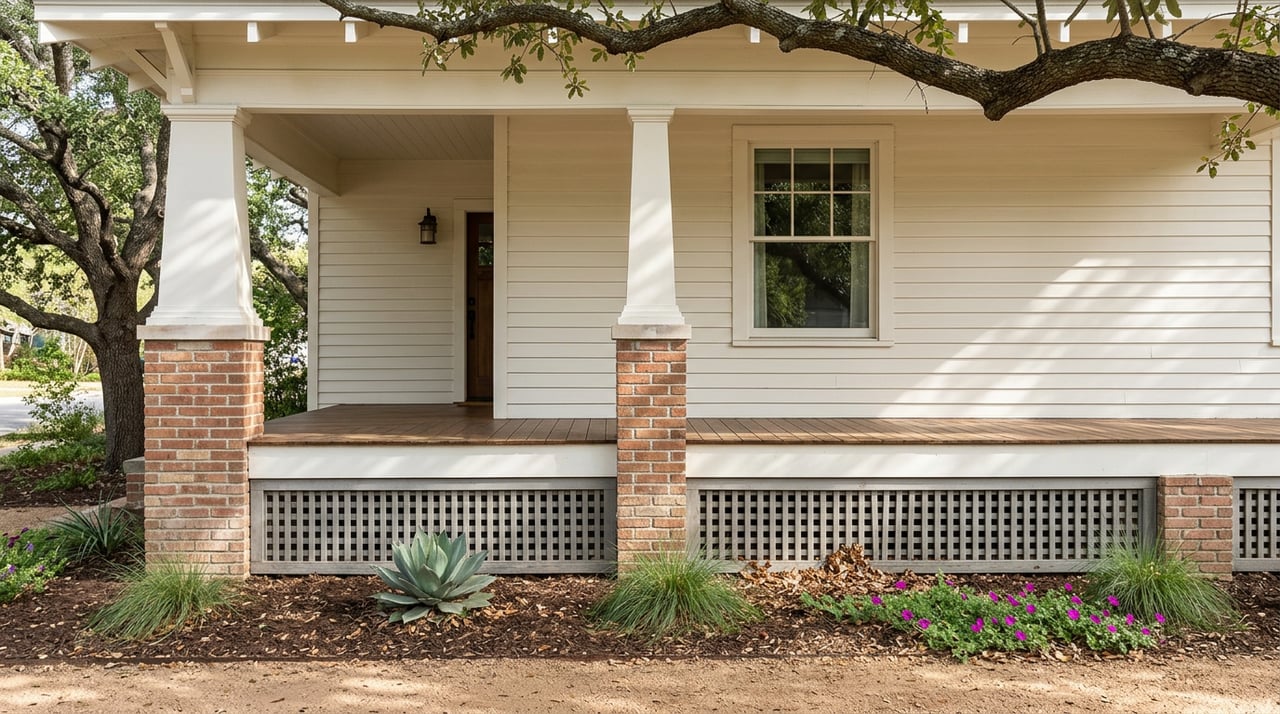
Here is what tends to surface. Travis Heights' housing stock runs heavily to pier-and-beam construction from the 1920s through the 1960s, a foundation type that elevates the home on piers over a crawl space rather than sitting on a poured slab. Pier-and-beam foundations tolerate soil movement better than slab foundations in some respects, but they come with their own failure points: cedar or early concrete piers that deteriorate with age and moisture, floor beams that sag where a pier has settled, and differential movement driven by the same live oaks that shade the lot, since mature root systems can pull moisture unevenly from the clay soil beneath a foundation. A structural engineer with pier-and-beam experience is not an optional add-on inspection here. It is close to a baseline requirement.
When that inspection turns up findings, and on a home of this vintage it usually does, repair costs for moderate pier and beam work commonly run in the $8,000 to $25,000 range in the Austin area, with larger jobs climbing from there depending on scope. That range is what actually gets negotiated inside the option period window, either as a price adjustment, a repair credit, or a walk-away.
The three frictions connect. The tree canopy that makes the neighborhood desirable is the same tree canopy that stresses the foundation underneath the house you're touring, and the permit process for that tree is separate from, and unrelated to, whatever historic designation may or may not apply to the address.
| What buyers and sellers assume | What actually shapes the deal |
|---|---|
| "It's a historic district, so renovations need approval" | True only inside the one-block Mary Street Local Historic District; everywhere else, National Register status doesn't restrict private owners |
| "The trees are just landscaping" | Any tree at or above 19 inches DBH is a regulated heritage tree requiring a city permit to remove or build near, regardless of its condition |
| "Foundation issues are rare in a well-kept house" | Pier-and-beam homes from this era commonly show some deterioration, and repair negotiations of $8,000 to $25,000 are routine during the option period |
Documenting this before the clock starts
For a seller, the smart move is doing the homework before the listing goes live, not after an offer arrives:
- Confirm in writing whether the property sits inside the Mary Street Local Historic District boundary or only within the broader National Register district.
- Get a pier-and-beam inspection from an engineer familiar with historic Austin foundations, and keep the report on hand. A documented, addressed issue reads very differently to a buyer than an issue discovered cold during their option period.
- If any heritage-size trees sit near planned work areas, know the critical root zone before a buyer's contractor asks about it.
For a buyer, the option period is not the time to discover any of this for the first time:
- Schedule the general inspection and a foundation specialist within the first day or two of the option period, not the last.
- Ask specifically whether any trees on the lot are heritage-size, and whether that affects where you can build.
- If the address falls inside the Mary Street boundary, build the Certificate of Appropriateness timeline into your renovation plan before you close, not after.
FAQ
Does National Register listing mean I need city approval to renovate my Travis Heights home? Not by itself. National Register status recognizes the property's historic value but does not restrict what a private owner may do. Approval is required only for properties inside the Mary Street Local Historic District, the one designated local district within Travis Heights.
What if my Texas option period ends and the foundation inspection still isn't finished? Once the option period expires, the unrestricted right to terminate goes with it. Scheduling the general inspection and any specialist follow-up in the first day or two of the window is standard practice for exactly this reason.
Do I need a permit to remove a dead tree if it's large enough to be a heritage tree? Yes. The permit requirement is based on trunk size, not condition, so a dead or declining heritage-size tree still requires city review before removal.
Buying or selling a pre-1960s home in Travis Heights means managing three separate systems at once: a historic designation that may or may not apply, a tree ordinance that almost certainly does, and a foundation type that rewards documentation over surprise. Adam Walker works this neighborhood block by block, including the parts that don't show up on a portal listing. If you're weighing a sale, start with a clear picture of where you actually stand: Get an Instant Home Valuation.